
What is Data Visualization?
- Parth Maheshwari

- Sep 6, 2020
- 2 min read
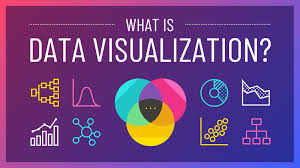
What is Data Visualization?
Data visualization involves presenting data in graphical or pictorial form which makes the information easy to understand. It helps to explain facts and determine courses of action.
Why do we need Data Visualization?
There has been the need for displaying massive amounts of data in a way that is easily accessible and understandable. Organizations generate data every day. As a result, the amount of data available on the Web has increased dramatically. Data visualization is also regarded as information visualization or scientific visualization. Human beings have always employed visualizations to make messages or information last in time.
Data visualization uses computer graphics to show patterns, trends, and relationship among elements of the data. It can generate pie charts, bar charts, scatter plots, and other types of data graphs with simple pull-down menus and mouse clicks
Advantages of Data Visualization
1. Rapid Identification of Latest Trends
In this age, the volume of data that companies are able to gather about customers and market conditions can provide business leaders with insights into new revenue and business opportunities, presuming they can spot the opportunities in the mountain of data. Using data visualization, decision makers are able to grasp shifts in customer behaviours and market conditions across multiple data sets much more quickly.
2. Accurate Customer Sentiment Analysis
Using data visualization, companies can attain a deeper dive into customer sentiment and other data, which reveals emerging opportunities for them to launch new services to their customers. These useful insights enable the enterprises to act on new business opportunities for staying ahead of their rivals.
3. Direct Interaction with Data
Data Visualization also helps the companies to manipulate and interact with their data in a direct manner. One of the greatest strengths of data visualization is how it brings actionable insights to the surface. Unlike one-dimensional tables and charts that can only be viewed, data visualization tools enable users to interact with data
4. Predictive Sales Analysis
With the help of real-time data-visualization, sales executives can carry out advanced predictive analytics for their sales figures, viewing up-to-date sales figures and see why certain products are under-performing and the reasons that sales are lagging. For example, discounts offered by competitors may be one of those reasons.
5. Drill-Down Sales Analysis
Using heat map data-visualization, business executives can illustrate which product groups are performing well or under-performing, and drill down into the data to determine the factors that are shaping sales. The data might reveal that pet-care products are under-performing, but that higher-income customers represent the majority of sales. These insights could be used to target promotions to this customer segment to increase conversion rates and revenue growth for this category.
6. Easy Comprehension of Data
Utilizing data-visualization, companies may approach huge data and makes it easily comprehensible, be it the field of entertainment, current affairs, financial issues or political affairs. It also builds in them a deep insight, prompting them to take a good decision and an immediate business action if needed.
7. Customized Data-Visualization
A yet another vital advantage of Data-visualization is that it not only provides graphical representation of data but also allows changing the form, omitting what is not required, and browsing deeper to get further details. This is a great eye catcher and attracts business executives’ attention better and provides better communication. Additionally, it provides a great advantage over traditional methods of presenting data.
Comments